








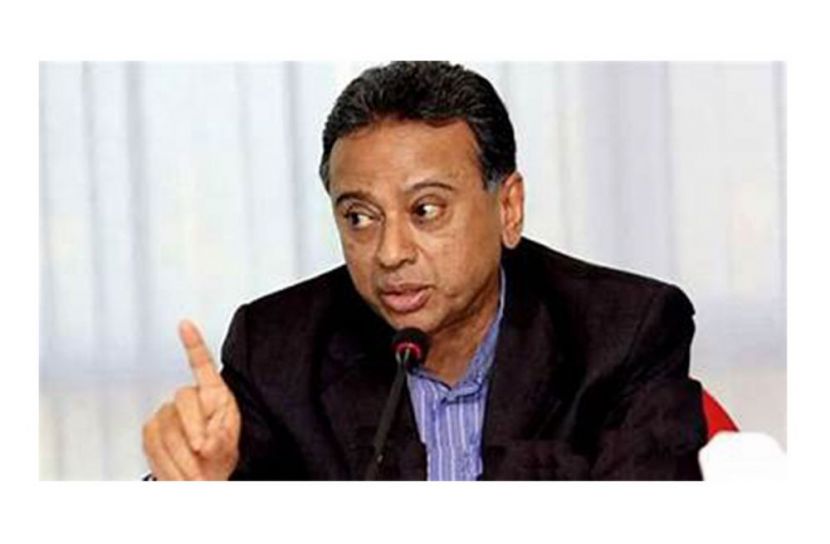
Finance and Planning Minister Amir Khasru Mahmud Chowdhury has described the country’s economy as being in a difficult and stagnant phase, citing rising poverty, falling investment and shrinking employment opportunities as key concerns.
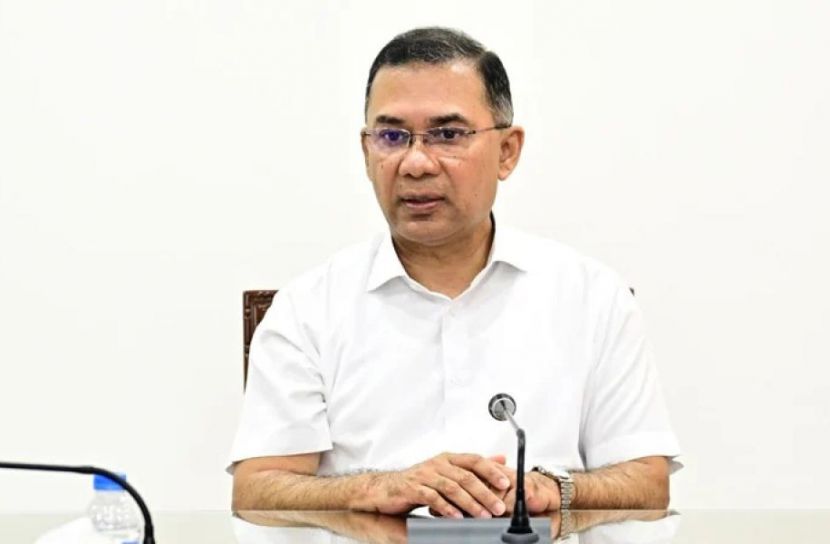
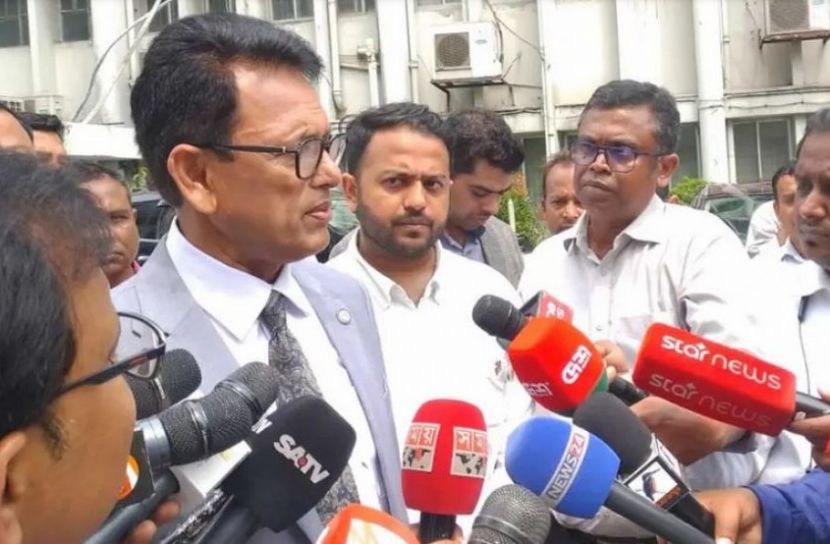
Speaking to reporters at his residence in Chattogram's Mehedibag on Friday, Khasru said the government’s immediate focus will be on structural reforms, introducing a participatory national budget and building a capital market based on trust and transparency.
He acknowledged a recent rise in stock market indices but termed it cosmetic, suggesting that investor optimism linked to expectations of democratic governance may have driven the uptick.
However, he warned that temporary gains would not be enough to ensure sustainable recovery.
For meaningful improvement, he said, reforms to laws and regulatory frameworks are essential. The Bangladesh Securities and Exchange Commission will be strengthened to enforce transparency and uphold a zero tolerance stance on irregularities. The government plans to encourage fundamentally strong and profitable companies to list on the market, attract domestic and foreign investment and rebuild investor confidence.
On the upcoming national budget, Khasru said it will depart from traditional approaches and instead prioritise equal access to economic opportunities.
He pledged an end to patronage based practices, alleging that vested groups had long benefited at the expense of the wider population. The new budget, he said, will seek to distribute the gains of development more broadly while ensuring fair competition.
Addressing the country’s debt burden and the issue of laundered funds, the minister said a portion of past borrowing had not been used productively and, in some instances, had been misappropriated. As a result, the current administration is servicing liabilities tied to assets that do not effectively exist.
He noted that large debt repayments are approaching and said the government is working through bilateral channels and with international professional institutions to recover siphoned off money wherever possible.
Turning to Chattogram’s development, Khasru said ongoing projects would continue but with strict oversight to guarantee transparency and efficiency. To establish Chattogram as a genuine commercial capital, he stressed the need for higher investment, improved port performance and expanded employment opportunities.
The minister also highlighted operational inefficiencies at Chattogram Port, warning that poor coordination and procedural complexities are raising the cost of goods.
After meeting members of the Port Users Forum, along with representatives from the port authority, customs, transport workers and other stakeholders, he said delays in cargo clearance and additional charges are increasing expenses that are ultimately passed on to consumers.
He explained that different groups involved in port operations often work in isolation, creating gaps in accountability. Imported goods face delays and extra costs, affecting not only consumer products but also industrial raw materials and other essential imports nationwide.
With Ramadan approaching, the government is giving priority to accelerating the clearance of essential commodities. Khasru cautioned that slow deliveries could trigger further price increases, adding that faster processing would help reduce avoidable costs.
Some immediate measures were agreed upon during the meeting, while other issues requiring coordination between ministries will be resolved in the coming days, he said.
The minister expressed hope that improved port management would speed up cargo handling, reduce production costs and ease price pressures in the market.
Earlier in the day, Khasru arrived in Chattogram via Shah Amanat International Airport.
PT/ra