










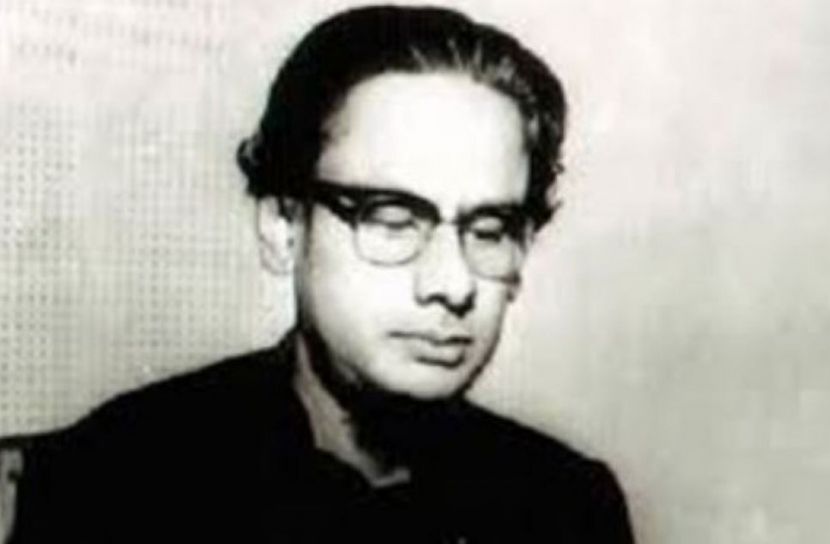
The 52nd death anniversary of Farrukh Ahmad, one of the leading poets of modern Bengali literature known for his role in the Muslim Renaissance is being observed today Monday (October 19).
He breathed his last at Eskaton Garden in the capital on this day in 1974.
Farrukh Ahmad was one of the most prominent poets of modern Bengali literature. Although his poetry in the 20th century was deeply influenced by Islamic thought, his poetic techniques and choice of words were distinctive. His works encompassed various aesthetic dimensions of modernism, and critics recognise his originality in the transition from romanticism to modern poetry.
His poetry inspired the revival of the declining Muslim community in Bengal.
Farrukh was an independent-minded, self-respecting and distinguished modern poet. His works reflected the style and refinement of Western modernist poets. He was also a strong voice against exploitation and oppression. He spoke out during the Language Movement of 1952, the Liberation War of 1971 and mass movements against Ayub Shah, among other political struggles. His poetry consistently raised its voice against injustice and oppression while celebrating humanity and equality regardless of race, religion or caste.
Farrukh Ahmad was born on June 10, 1918, in Majhail village of Magura district. His father was Syed Hatem Ali and his mother was Begum Rowshan Akhtar.
He passed his matriculation examination from Khulna Zilla School in 1937 and completed his Intermediate (IA) from Ripon College in Kolkata in 1939. He later enrolled at Scottish Church College to study philosophy and English literature but entered professional life without sitting for the examinations.
In 1945, he served as acting editor of the monthly magazine Mohammadi, although his regular employment was at Dhaka Radio. In November 1942, he married his cousin Syeda Taiba Khatun Lily.
Although Farrukh Ahmad wrote in several literary genres, poetry remained his principal identity. His notable poetry collections include Saat Sagarer Majhi (1944), Sirajam Munira (1952), Noufel O Hatim (1961) and Hatemtayi (1966). His children's works include Pakhir Basa (1965), Haraf-er Chhara (1970) and Chharar Asar (1970).
His awards and honours include the Bangla Academy Award in 1960, the President's Award for Pride of Performance in 1961, the Adamjee Award in 1966, a UNESCO award in 1966, the Ekushey Padak posthumously in 1977 and the Independence Award in 1980.
PT/ra