





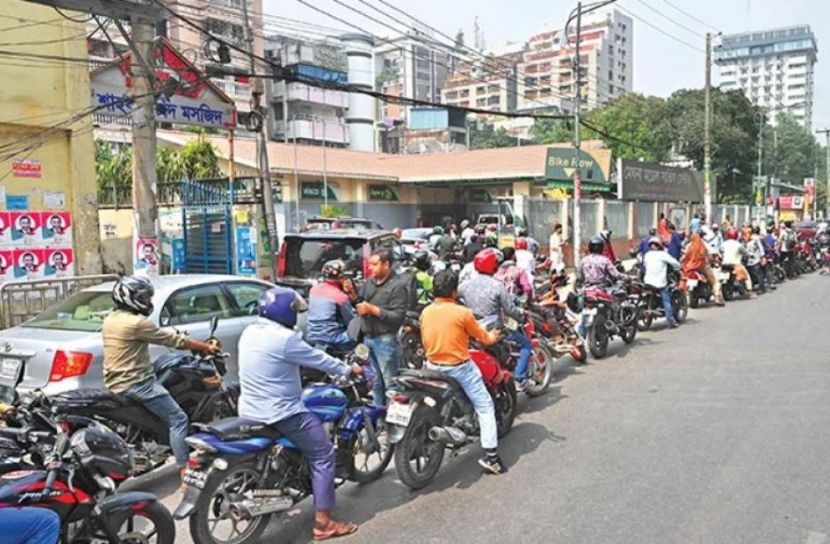
The government has imposed limits on fuel purchases per vehicle as authorities seek to curb panic buying and prevent shortages amid global supply disruptions linked to the ongoing US-Israel conflict involving Iran.
In a notification issued on Friday, the Bangladesh Petroleum Corporation (BPC) outlined new caps on the amount of fuel consumers can purchase at filling stations.
Under the new rules, motorcycles may buy a maximum of 2 liters of petrol or octane per visit, while private cars are limited to 10 liters. Jeeps and microbuses can purchase between 20 and 25 liters. Pickup trucks and local buses running on diesel are capped at 70 to 80 liters, and long-distance buses and trucks may buy up to 200 to 220 liters.
The decision follows concerns over public anxiety regarding fuel stock levels. Officials said that negative reports circulating in media and on social platforms have triggered unusually high demand, with some dealers attempting to collect more fuel than usual from depots and some consumers allegedly stockpiling fuel beyond their immediate needs.
BPC emphasized that about 95 percent of country’s fuel is imported, and global crises can occasionally disrupt or delay shipments.
However, the corporation assured the public that fuel imports are continuing as scheduled and consignments are arriving regularly. Fuel is being distributed from main installations to depots across the country via rail wagons and tankers. Authorities expressed hope that adequate buffer stocks will be built up soon.
To ensure transparency and prevent hoarding, several conditions have been imposed. Filling stations must issue purchase receipts clearly stating the type, quantity, and price of fuel sold. Consumers must present the original copy of their previous purchase receipt when buying fuel again.
Dealers are required to follow allocation guidelines strictly and provide stock and sales data to their respective depots before lifting fuel. Oil marketing companies have been instructed not to supply beyond approved allocations.
The government reiterated that fuel must be sold at officially set prices and warned that charging extra under the pretext of crisis would constitute a punishable offense.
Earlier, State Minister for Power, Energy and Mineral Resources Anindya Islam Amit announced on Friday that fuel will be sold under a rationing system from Sunday in a bid to prevent long-term shortages.
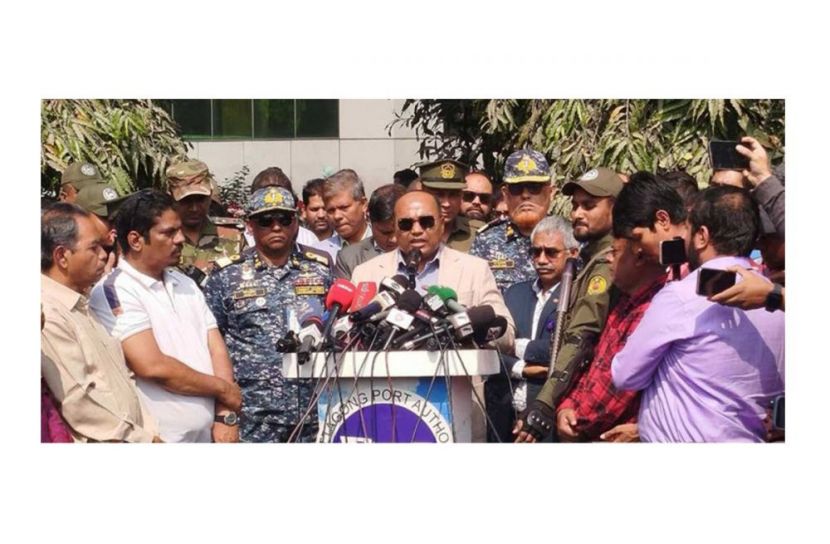
Speaking to reporters after inspecting a petrol pump in the capital’s Paribagh area, the state minister said written directives outlining the new rationing system would be issued to fuel stations nationwide.
He said the move is aimed at ensuring sustainable fuel supply and managing distribution efficiently amid concerns over potential supply disruptions.
PT/ra